






Prodotto
Tabelloni e programmazione automatici: la fine del foglio di calcolo del torneo
Dispute sulle teste di serie, sovrapposizioni di campo e un tabellone che richiede due giorni per essere costruito. Zeetius Tournaments genera il tabellone in secondi e lo mantiene onesto.
Ask any tournament referee what they dread and you will not hear about the matches. You will hear about the two days before them.
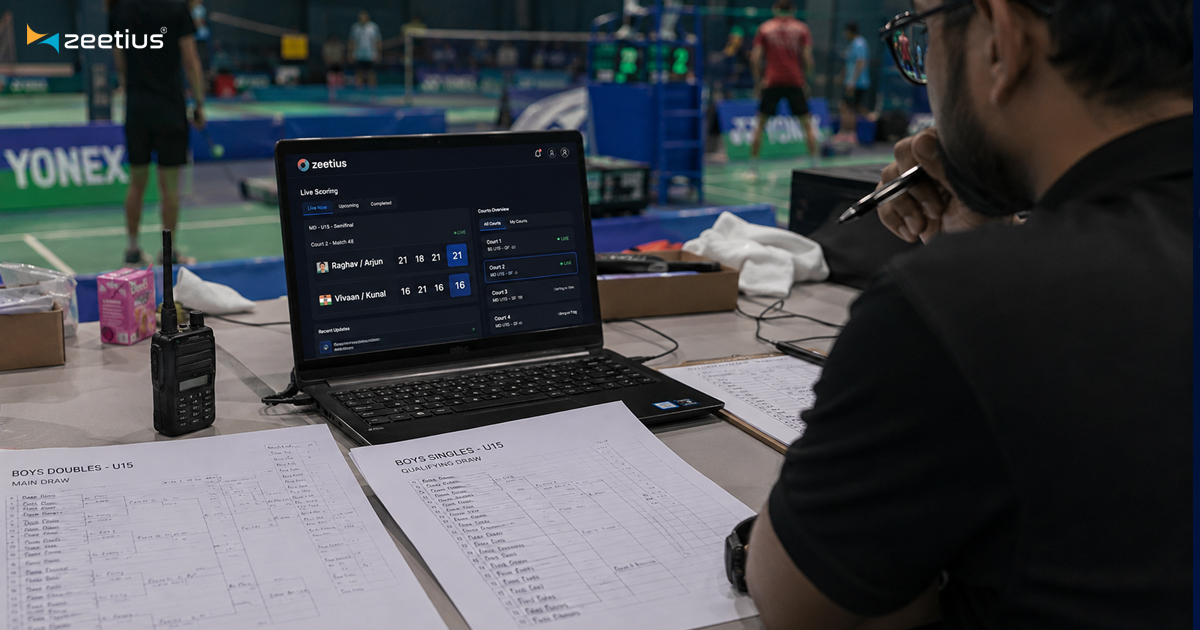
Un tabellone è un problema combinatorio davvero difficile travestito da compito amministrativo. Devi assegnare correttamente le teste di serie, separare il più a lungo possibile i giocatori dello stesso club o distretto, rispettare i bye senza dare a nessuno un percorso ingiusto, far stare tutto nei campi e nelle ore che hai davvero, e produrre qualcosa che cento genitori esamineranno in cerca di prove di favoritismo. Farlo a mano, a mezzanotte, con le iscrizioni che ancora arrivano, è così che nascono le dispute.
What the draw engine does
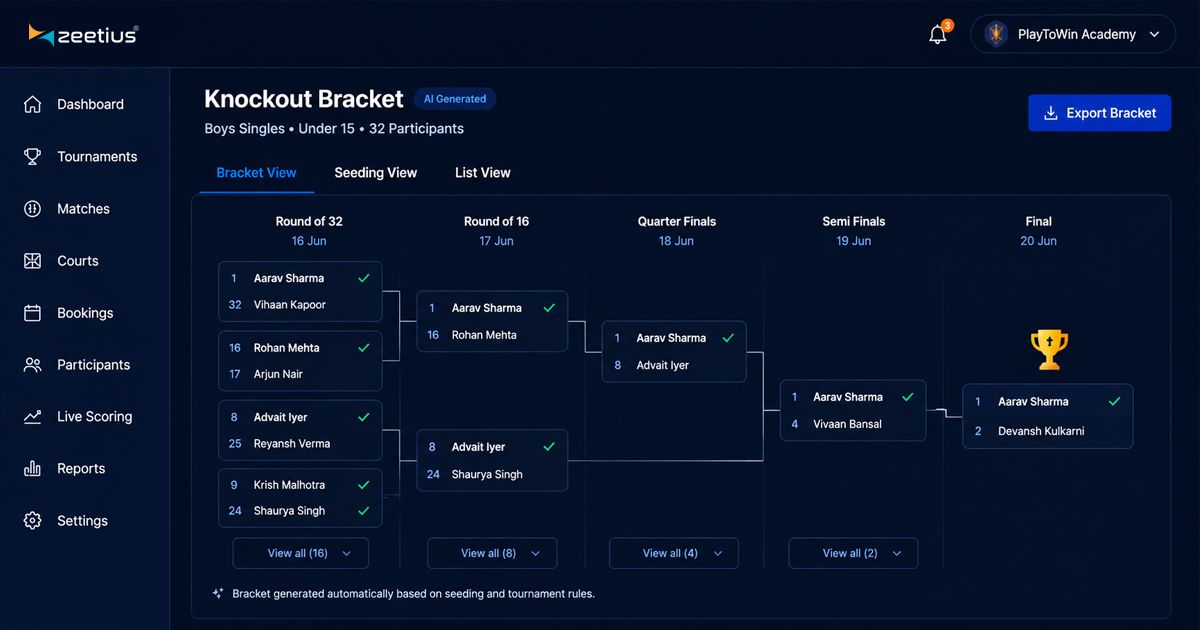
Zeetius Tournaments costruisce il tabellone dalla lista di iscritti e dalle regole dell'evento stesso, in secondi, e poi lo mantiene coerente per il resto del torneo.
- Teste di serie dal registro, non dalla memoria. Le teste di serie vengono dal ranking o dai risultati precedenti conservati sulla piattaforma, applicati con la stessa regola a ogni evento. Se una testa di serie sembra sbagliata, puoi indicare i dati che l'hanno prodotta.
- Regole di separazione. Stesso club, stesso distretto, stessa accademia: tenuti separati fino al turno che configuri, automaticamente, in ogni evento del torneo contemporaneamente.
- Bye posizionati correttamente. I bye vanno nelle posizioni dettate dal formato, non a chi si trovava per caso in cima al foglio.
- Qualificazioni, tabellone principale e consolazione come un'unica struttura. Un qualificato che passa finisce nello slot giusto del tabellone principale senza che nessuno trascriva un nome.
- Formati all'italiana e ibridi. Gironi con classifiche, regole di spareggio applicate in modo coerente e i qualificati giusti promossi alla fase a eliminazione.
Scheduling is the half that gets forgotten
A perfect draw that cannot be played is not worth much. The scheduler works backwards from the constraint that actually binds: courts multiplied by hours.
It respects minimum rest between matches for the same player — the single most common source of complaints in multi-event tournaments where one athlete is in singles, doubles and mixed. It keeps events progressing in step so no category finishes a day ahead of the rest. And when a match runs long, which it always does, the running order re-sequences rather than collapsing.
The referee stays in charge
Automation here is not autonomy. Every generated draw is presented for review before it is published, and a referee can override any placement — the system records that it was overridden and by whom. The goal is not to remove human judgement from the draw. It is to remove transcription, arithmetic and the 2am fatigue that turns judgement into error.
What changes for everyone else
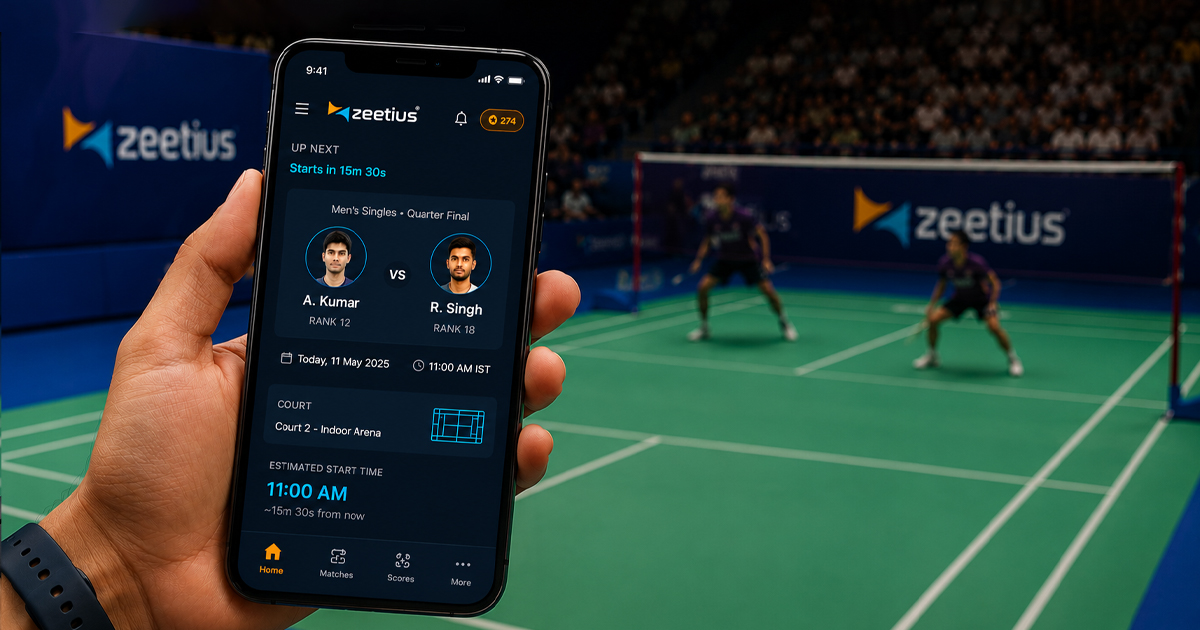
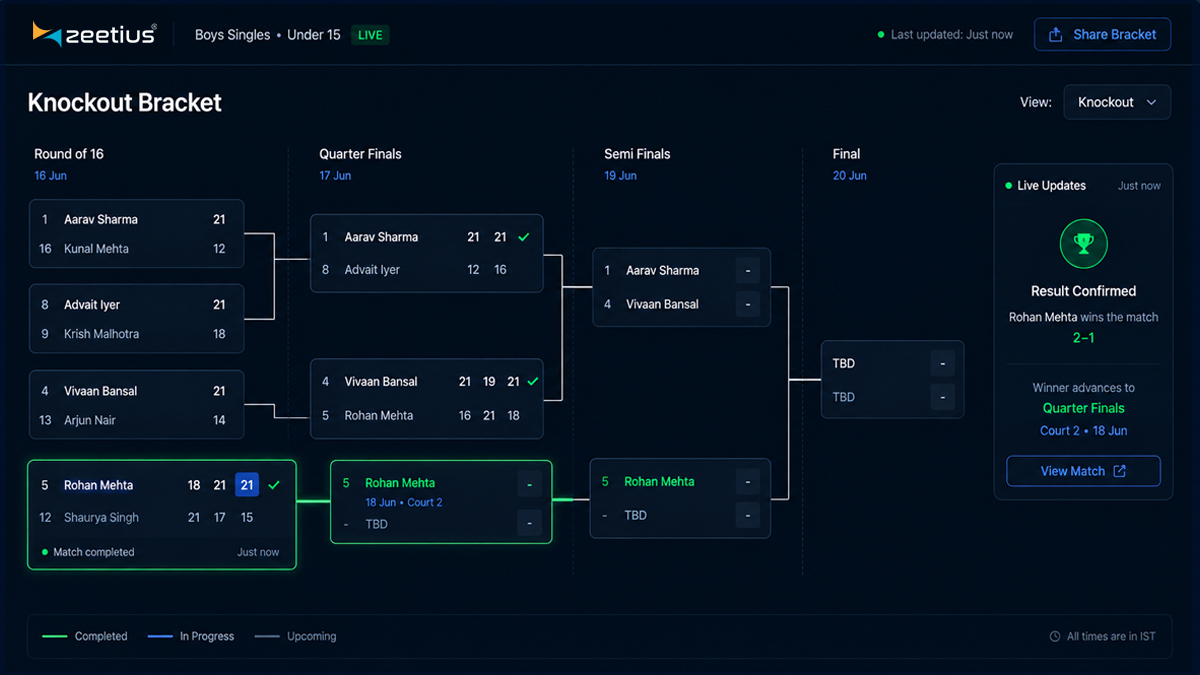
For players, the draw is public the moment it is approved, on a phone, with their own matches highlighted. For coaches, the path is visible — who is in your half, and what a quarter-final looks like. For spectators, the bracket fills in live as results come in rather than being re-uploaded as a PDF each evening.
And for the referee, the two days before the tournament become an afternoon.