






Product
Automated Draws and Scheduling: The End of the Tournament Spreadsheet
Seeding disputes, court clashes and a draw that takes two days to build. Zeetius Tournaments generates the bracket in seconds and keeps it honest.
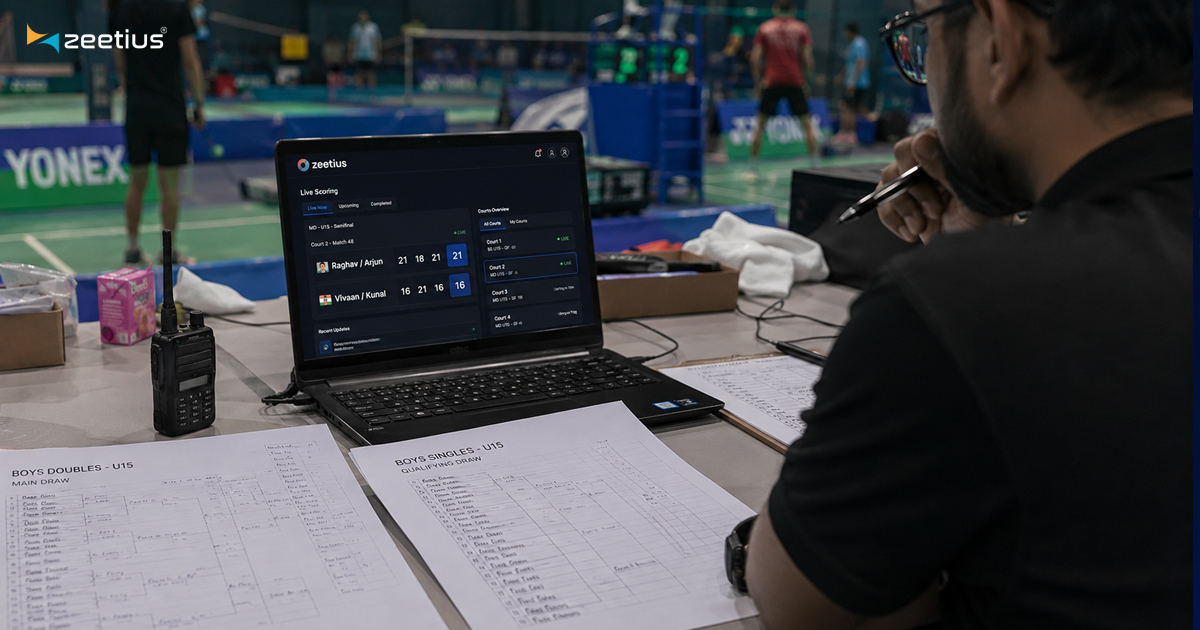
Ask any tournament referee what they dread and you will not hear about the matches. You will hear about the two days before them.
A draw is a genuinely hard combinatorial problem wearing the disguise of an administrative task. You have to seed correctly, separate players from the same club or district as long as possible, honour byes without giving anyone an unfair path, fit everything into the courts and hours you actually have, and produce something that a hundred parents will scrutinise for evidence of favouritism. Doing that by hand, at midnight, with entries still trickling in, is how disputes are born.
What the draw engine does
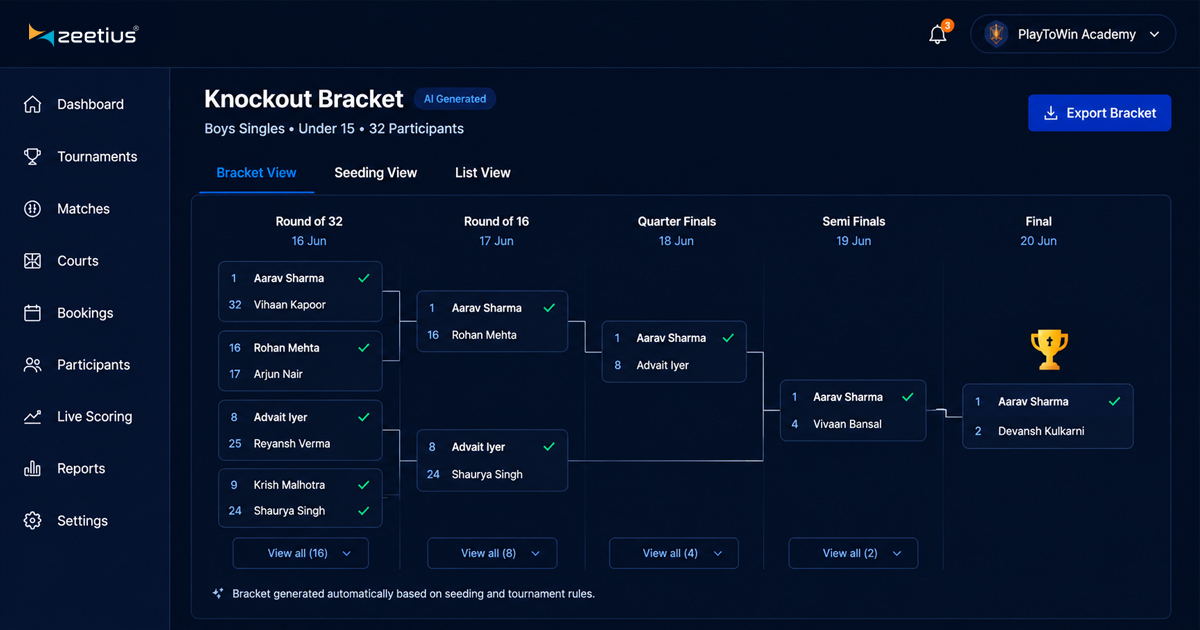
Zeetius Tournaments builds the bracket from the entry list and the event's own rules, in seconds, and then keeps it consistent for the rest of the tournament.
- Seeding from the record, not from memory. Seeds come from ranking or previous results held on the platform, applied by the same rule to every event. If a seeding looks wrong, you can point at the data that produced it.
- Separation rules. Same club, same district, same academy — kept apart to the round you configure, automatically, across every event in the tournament at once.
- Byes placed properly. Byes go to the positions the format dictates, not to whoever happened to be at the top of the sheet.
- Qualifying, main draw and plate as one structure. A qualifier who comes through lands in the right main-draw slot without anyone transcribing a name.
- Round robin and hybrid formats. Pools with standings, tie-break rules applied consistently, and the correct qualifiers promoted into the knockout stage.
Scheduling is the half that gets forgotten
A perfect draw that cannot be played is not worth much. The scheduler works backwards from the constraint that actually binds: courts multiplied by hours.
It respects minimum rest between matches for the same player — the single most common source of complaints in multi-event tournaments where one athlete is in singles, doubles and mixed. It keeps events progressing in step so no category finishes a day ahead of the rest. And when a match runs long, which it always does, the running order re-sequences rather than collapsing.
The referee stays in charge
Automation here is not autonomy. Every generated draw is presented for review before it is published, and a referee can override any placement — the system records that it was overridden and by whom. The goal is not to remove human judgement from the draw. It is to remove transcription, arithmetic and the 2am fatigue that turns judgement into error.
What changes for everyone else
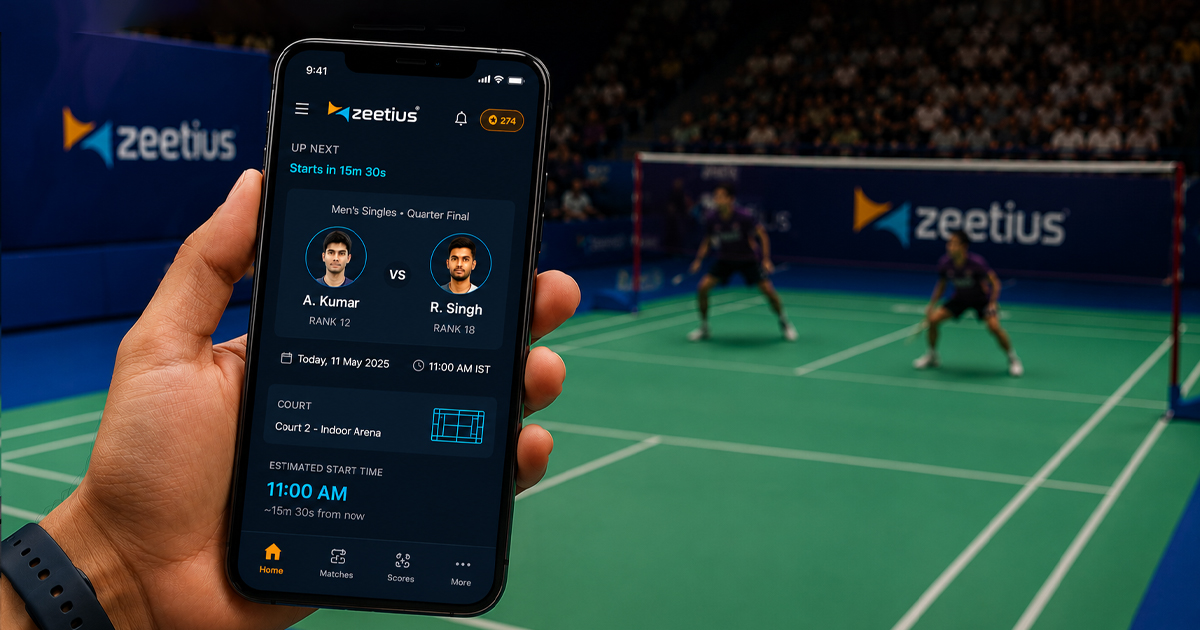
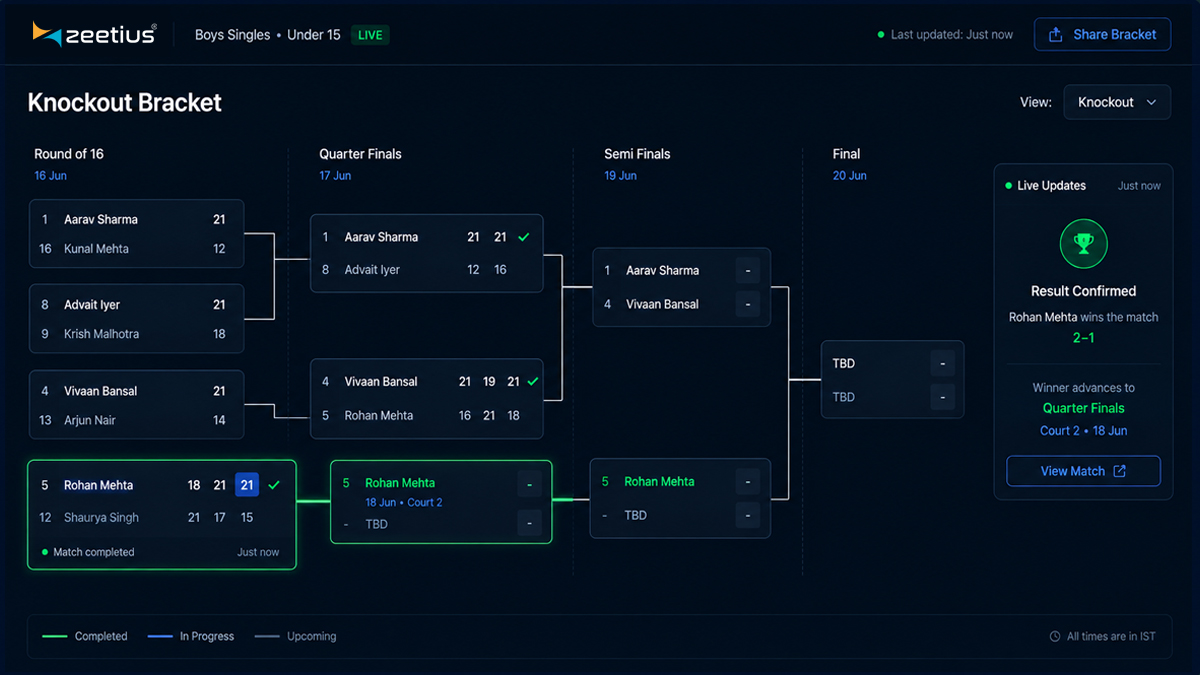
For players, the draw is public the moment it is approved, on a phone, with their own matches highlighted. For coaches, the path is visible — who is in your half, and what a quarter-final looks like. For spectators, the bracket fills in live as results come in rather than being re-uploaded as a PDF each evening.
And for the referee, the two days before the tournament become an afternoon.