






Industry
Why 2025 Is the Year Sport Finally Digitises
Most associations still run on a spreadsheet, a WhatsApp group and one person who knows how it all works. Here is why that model is out of road.
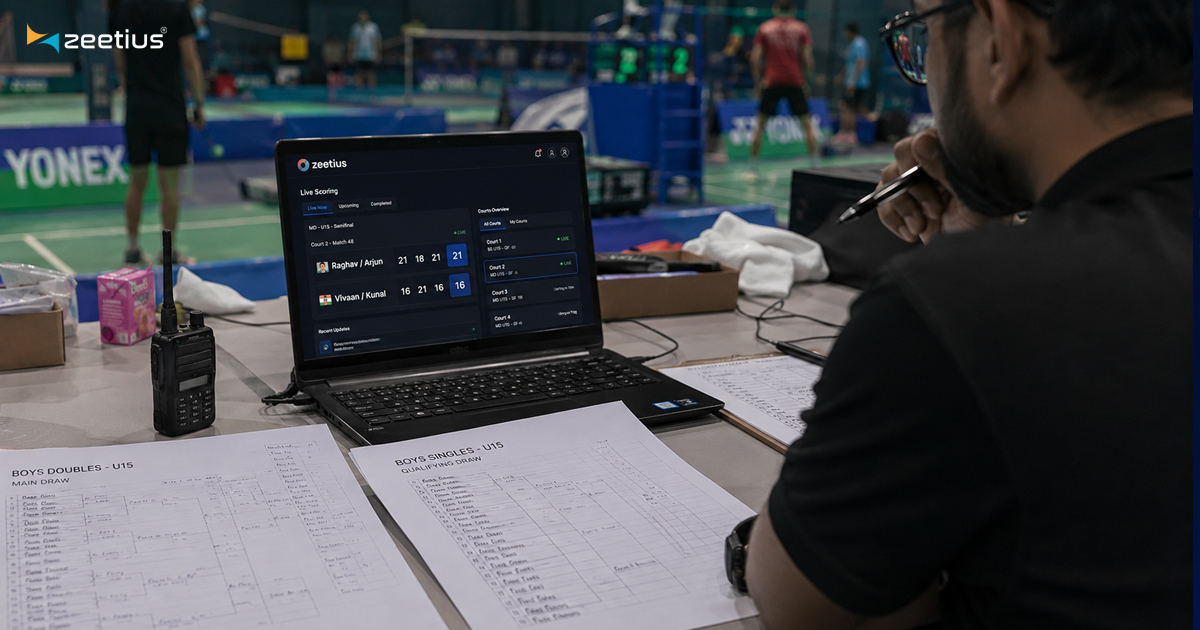
Almost every sports association we meet runs on the same three tools: a spreadsheet, a WhatsApp group, and one person who knows how everything actually works. It is not incompetence. It is what was available. For thirty years that combination was genuinely enough to run a district championship.
It stopped being enough somewhere around the point where a state entry list crossed a thousand players, and it broke completely when parents started expecting to see the draw on their phone the same evening it was made.
The spreadsheet has a ceiling, and everybody hits it
The failure mode is always the same and it is always at the worst moment. Entries close on a Sunday. Somebody merges four district lists into one workbook. Two players share a name, three have paid but are on a different sheet, and one withdrawal arrives by phone call and never makes it into the file. The draw goes up on Monday. By Tuesday there are four disputes, and every one of them is resolved by whoever still has the original WhatsApp message.
The cost is not the errors. The cost is that the association's entire institutional memory lives in one volunteer's laptop and phone, and when that person steps down, the organisation restarts from zero.
What actually changed
Three things converged, and none of them were software.
- Participation grew faster than administration. Racquet sports in particular pulled in a wave of new adult players who had never been through a federation registration process and had no patience for one that took three weeks.
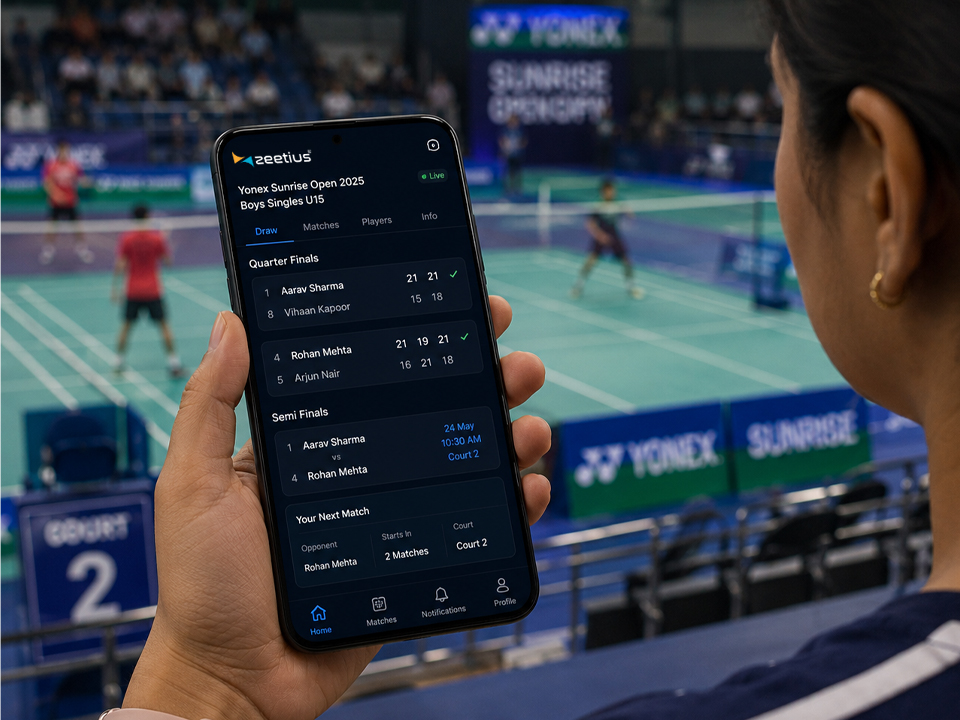
- Phones became the primary screen. A parent at a venue does not want a PDF of the draw. They want to know which court their child is on and roughly when.
- Sponsors started asking for numbers. Not attendance guesses — viewership, engagement, reach. An association that cannot produce those numbers cannot price its own inventory.
The phone is the venue now
The single biggest behavioural shift is that the audience for tournament data is no longer the officials' table. It is a few hundred people standing in a hall, plus a few thousand at home, all refreshing the same page. That audience never existed when the draw was a sheet of paper pinned to a wall, and it is entirely invisible to a system built around one.
Digitisation is not a website
The most common false start is treating this as a communications problem: build a nice site, post the results as PDFs, done. Six months later the association is doing all the old work plus uploading files.
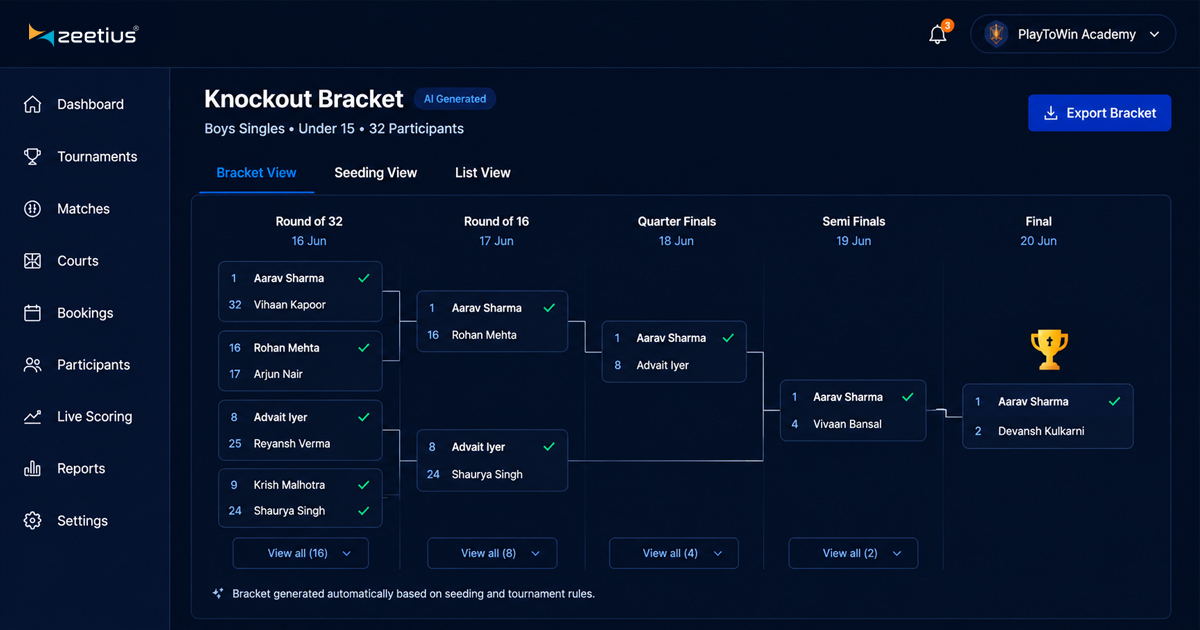
The thing that actually removes work is a single record of the tournament that every part of the operation reads from and writes to. One player registry that entries draw from. One draw that the scoring screens, the public site and the results archive all render from. One score that, the moment an umpire confirms it, simultaneously updates the live page, advances the bracket, and closes out the fixture. Nobody re-types anything, because there is nothing to re-type.
That is the whole idea behind how Zeetius is built. Registration, draws, scoring, results, streaming and analytics are not separate products that export to each other. They are views onto the same tournament.
Where an association should actually start
Not with everything. The associations that succeed at this pick the one thing that hurts most and fix that first, then expand once people trust it.
- If entries are the pain: start with online registration and approvals. It is the least disruptive change and it immediately gives you a clean player database, which everything else depends on.
- If the draw is the pain: start with automated draws and scheduling. Seeding rules applied consistently, by a machine, end most disputes before they start.
- If the complaint is 'nobody knows what is happening': start with live scoring. It is the most visible change and the one that buys you the most goodwill for the rest.
What matters is the sequence, not the speed. Every one of those steps produces clean data that makes the next step cheaper. Do them in the wrong order and you end up digitising the mess instead of the sport.