






How it works
How a District Association Runs an Entire Season on Zeetius
A walkthrough of the operational year — affiliations, registrations, entries, draws, scoring, results and rankings — as the platform actually handles it.

Most software gets explained feature by feature, which is a terrible way to understand whether it fits your organisation. Associations do not experience software as features. They experience it as a year.
So here is the year. This is the operational cycle a district or state association goes through, and what Zeetius Associations does at each stage. Zeetius runs association sites on subdomains — bai, pdmba, kba and gba among them — and this is the shape they all share.
Pre-season: affiliations and the member registry
The year starts with clubs and academies renewing affiliation. Each affiliated body gets its own login and manages its own roster, which is the single most important structural decision in the whole system: the association stops being the data-entry department for every club in the district.
Players register themselves or are registered by their club, with documents and eligibility attached. The secretary sees an approval queue rather than an inbox. Approve, and the player receives credentials automatically; reject, and they receive the reason. The member registry that results is the spine everything else in the year hangs off.
Entry windows: the part that used to consume weekends
A tournament is published with its events, eligibility rules, entry deadline and fees. Players enter from their own accounts — or their club enters them — and the system checks eligibility as they do it: age category, affiliation status, registration validity, outstanding dues.
This is where the compounding starts. Because the registry is clean, the entry list is clean. Nobody is reconciling four district spreadsheets, because there never were four spreadsheets. The entry list is the database, filtered.
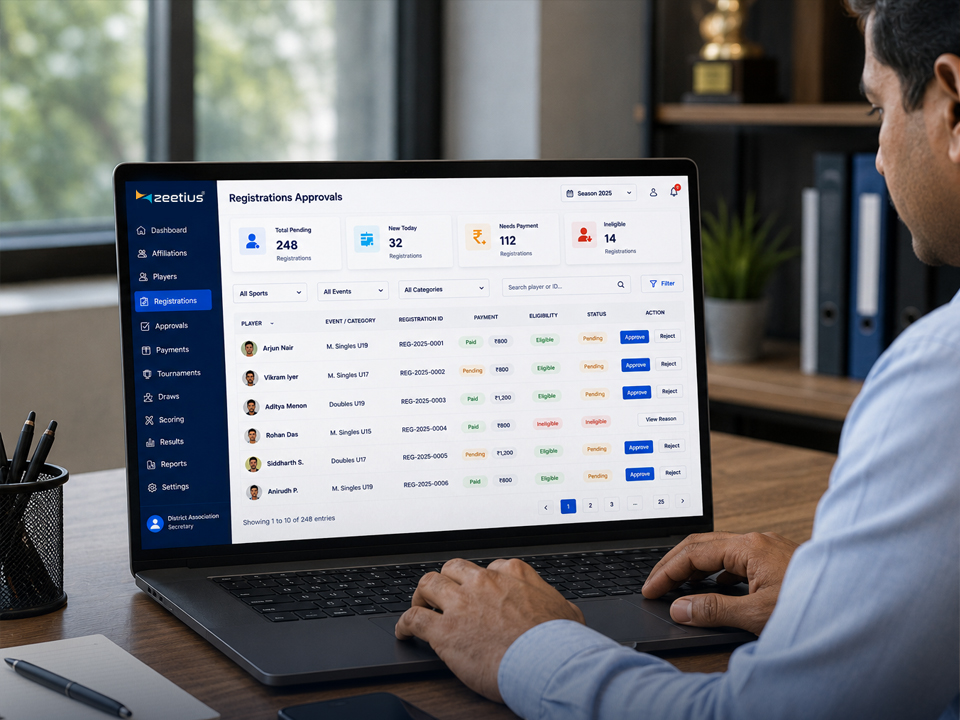
One queue instead of an inbox
The approval queue is the feature secretaries mention first, and it is not because it is clever. It is because it replaces the single most draining part of the job: reading a hundred emails with attachments, cross-checking each against a spreadsheet, replying individually, and remembering which ones are still outstanding. The queue shows status, payment and eligibility together, and clearing it is a task with an end.
Tournament week: draws, courts, officials
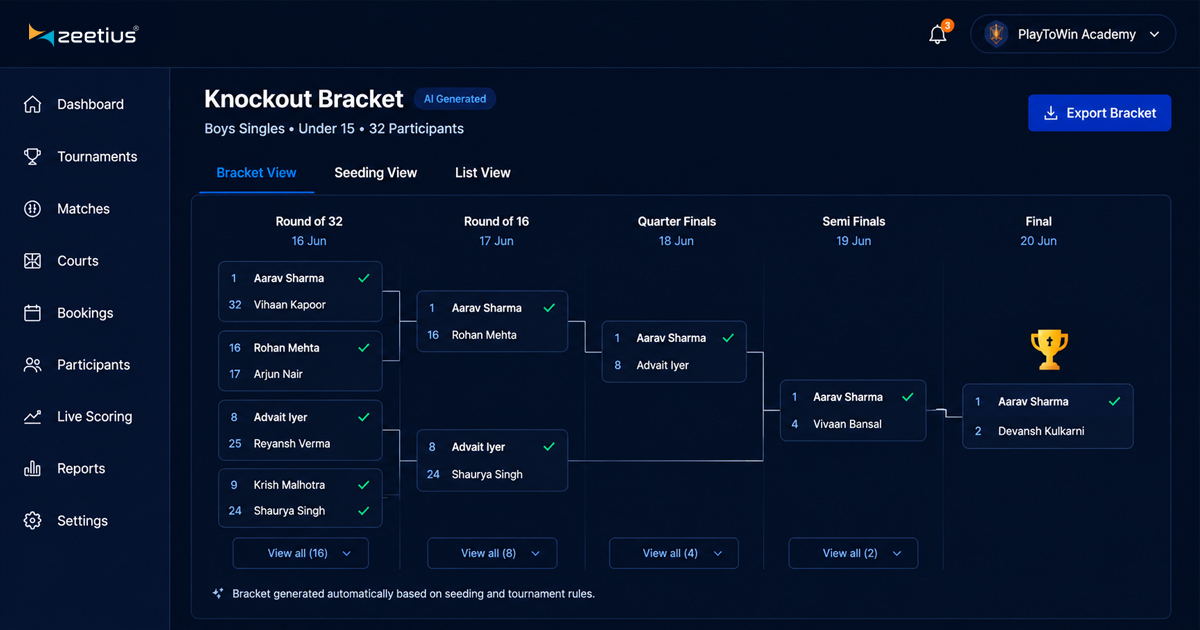
The draw is generated from the entry list with seeding and separation applied automatically, reviewed by the referee, then published — covered in detail in our piece on automated draws. Officials are assigned and notified. Courts are allocated and the running order is built around court-hours.
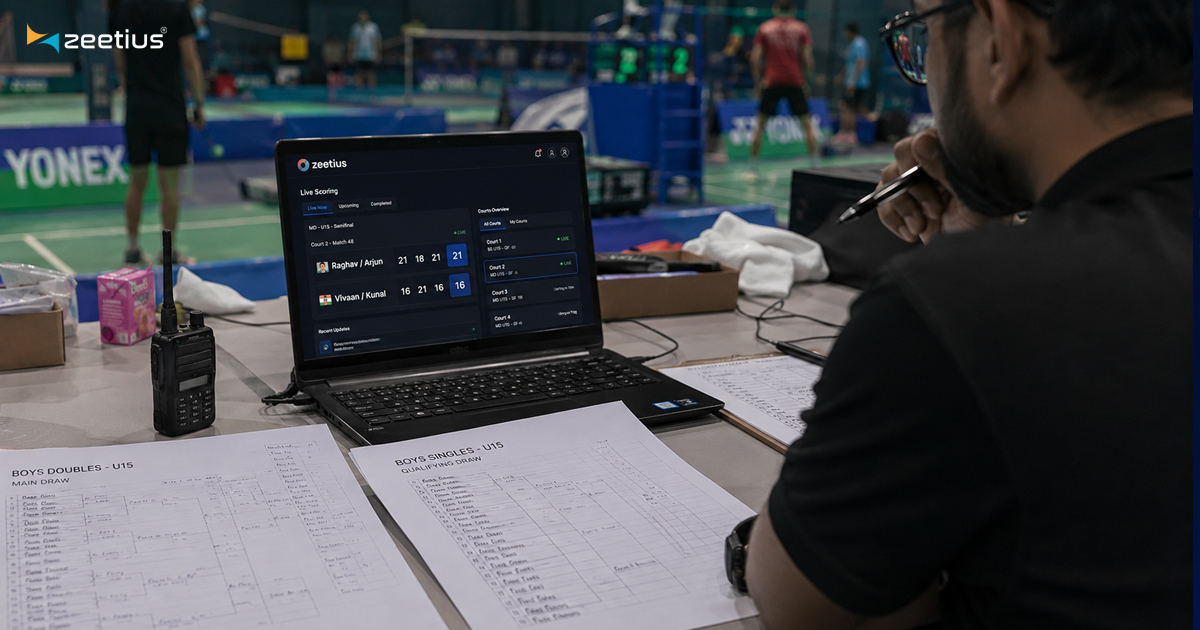
Then the tournament runs. Umpires score at courtside, the bracket advances as results confirm, and the public sees live scores, live draws and results without anybody uploading anything.
The evening of the final: the bit that used to take three weeks
Results are already final and published, because they were published as they happened. Certificates generate from the results and go out by email. Points flow into the ranking. The tournament archive is complete the moment the last match ends.
This is the change that association officials find hardest to believe before they see it. The traditional post-tournament period — compiling results, chasing scoresheets, printing certificates, updating rankings, answering "where are the results?" for a fortnight — does not compress. It disappears, because every one of those tasks was a consequence of the data being scattered.
Year-round: communication, revenue and the record
- Email and SMS to the whole registry or any slice of it — an age category, a district, everyone with a lapsed registration.
- Rankings maintained continuously from tournament results rather than recomputed by hand at season end.
- Sponsorship inventory that can be sold on numbers, because live pages and streams produce real viewership data.
- An institutional record that survives a change of secretary — the reason many associations start this process in the first place.
What it does not do
It does not make the decisions. Seeding rules, eligibility policy, entry fees, disciplinary matters and selection remain the association's. The platform's job is to apply those decisions consistently to every player and to make the record of them public and permanent. Where associations run into trouble is expecting software to resolve a governance question; it will only ever enforce the answer you give it, to everyone, identically — which is usually what was wanted anyway.