






Industry
Court Utilisation Is the Silent Revenue Leak in Community Sport
Most venues are booked solid at 7pm and empty at 2pm, and almost none of them can tell you by how much. The problem is measurement before pricing.
Here is a question almost no venue owner can answer without guessing: what percentage of your court-hours last month were actually paid for?
Not booked. Paid for, and used. The gap between those three numbers is where most community sports venues quietly lose the majority of their potential revenue, and the reason it stays hidden is that nobody is measuring it.
The shape of the problem
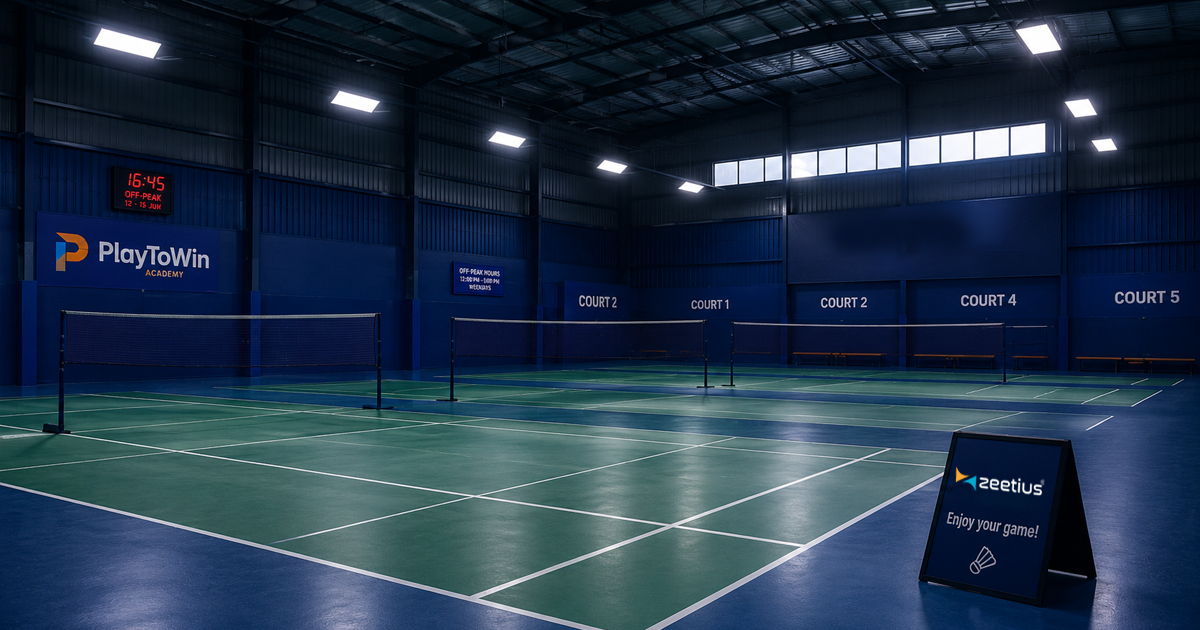
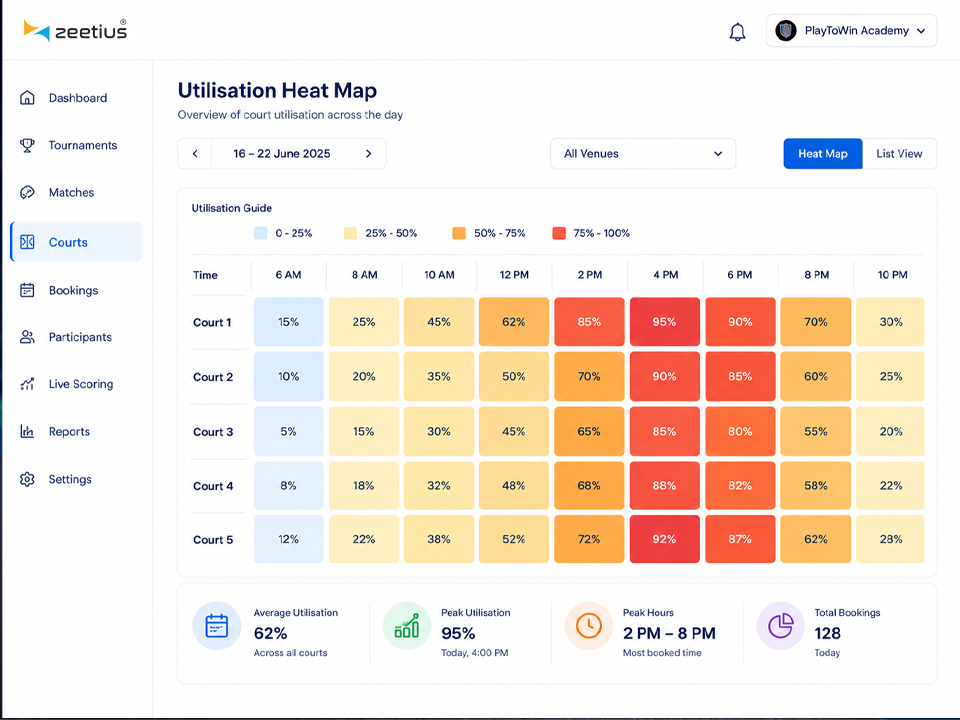
Demand for courts is not evenly distributed — it is one of the most extreme peak-load patterns in any consumer business. Six to ten in the evening is oversubscribed to the point of turning people away. Ten in the morning to four in the afternoon is close to empty. Weekends invert the whole pattern again.
A venue with eight courts open fourteen hours a day has 112 court-hours to sell daily. The evening peak is maybe four of those hours, so 32 court-hours are contested and the remaining 80 are not. Even at a discount, the off-peak block is the larger commercial opportunity, and it is the one that receives no attention at all.
Three leaks, in order of size
- Unmeasured off-peak. You cannot price or market inventory you are not counting. Most venues do not know their daytime utilisation to within twenty percentage points.
- No-shows on peak slots. A booked-and-unused 7pm court is worse than an empty one, because it also turned away a paying player. Without a booking system that confirms and releases, this is invisible.
- Booking friction. Every booking that requires a phone call during business hours is a booking that some proportion of people simply do not make. The lost revenue never appears anywhere, because the transaction never existed.
Measurement comes before pricing
The instinct is to jump straight to dynamic pricing — cheap mornings, premium evenings. That is the right destination and the wrong first step. Discounting inventory you have not measured just moves revenue from peak to off-peak without growing it. Get a month of honest utilisation data first; the pricing decisions become obvious once you can see the shape, and they are usually not the ones you would have guessed.
Who actually fills the daytime
The venues that solve this all find the same answer: the off-peak buyer is not the same person as the peak buyer, and they are not reachable by the same channel.
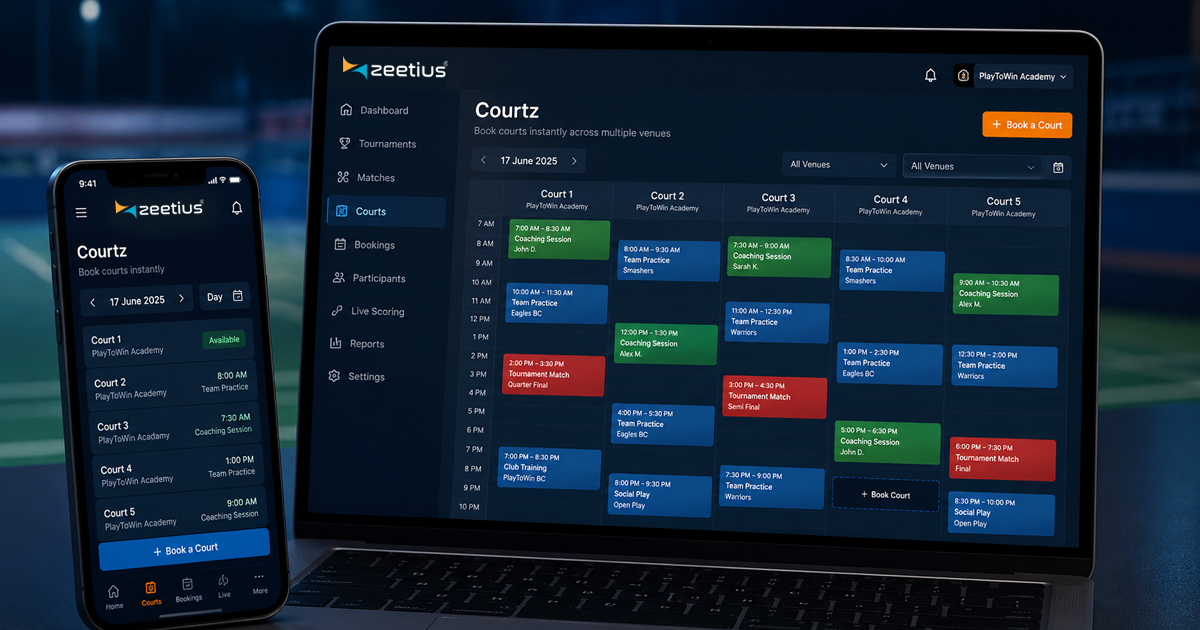
Daytime courts get filled by academies running junior batches, corporate groups, retirees, shift workers, and coaches who want a predictable slot to teach in. Those are all bookable relationships rather than walk-ups, and every one of them needs recurring bookings, block bookings and predictable availability — exactly the things a phone-and-notebook system handles worst.
That is the gap we have spent this year building for, and it is why the next thing we ship is a court booking product rather than another tournament feature.