






Sport
Pickleball and Padel Are Booming. They Do Not Fit Badminton's Software.
The new racquet sports grew from social play, not federations. That inverts almost every assumption tournament software was built on.
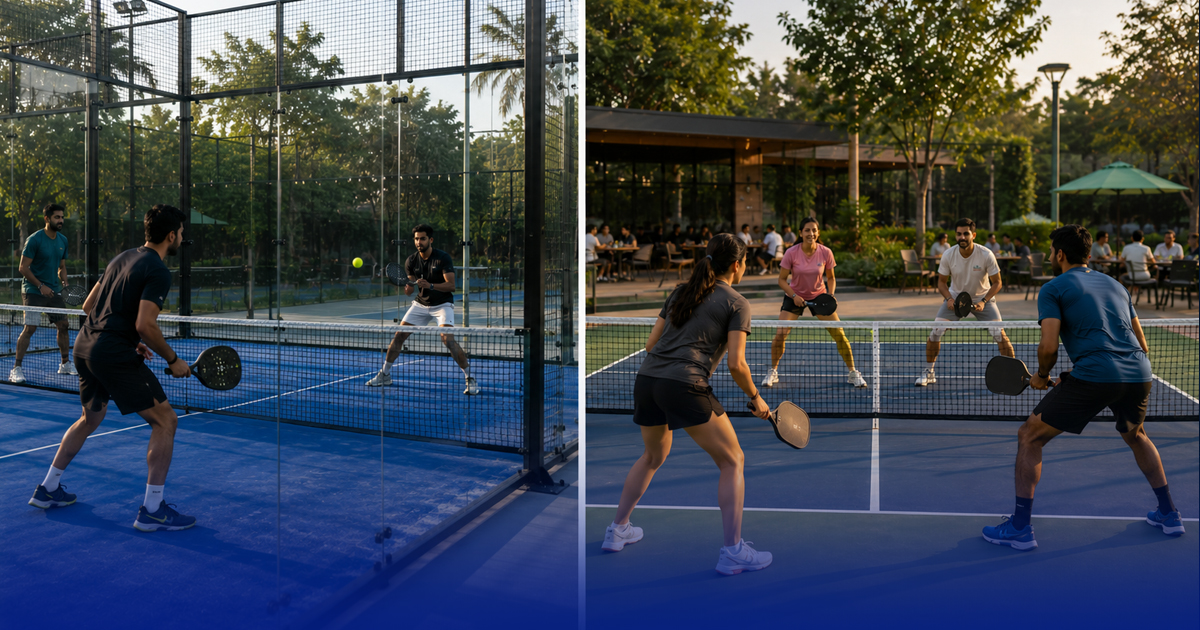
Pickleball and padel are the fastest-growing racquet sports in the world, and the software the racquet-sports world already had is a poor fit for both. Not because the scoring is difficult — it is not — but because they grew up the wrong way round.
Federation-first versus player-first
Badminton, table tennis and tennis grew downward. A federation existed, it affiliated state and district bodies, those bodies ran tournaments, and players registered into a structure that predated them by decades. Every piece of software in the category assumes that shape: a member registry, affiliations, eligibility, ranking points, a calendar owned by governing bodies.
Pickleball and padel grew upward. Someone converted a court. A WhatsApp group formed. People played socially for a year. Then somebody ran a friendly tournament, then a ladder, and only then — sometimes years later — did a formal body appear to organise what was already happening.
Point software built for the first world at the second and it fails in an interesting way: it works perfectly and nobody uses it, because it asks for an affiliation number from a player who has never heard of the federation and just wants to play on Thursday.
What these sports need first
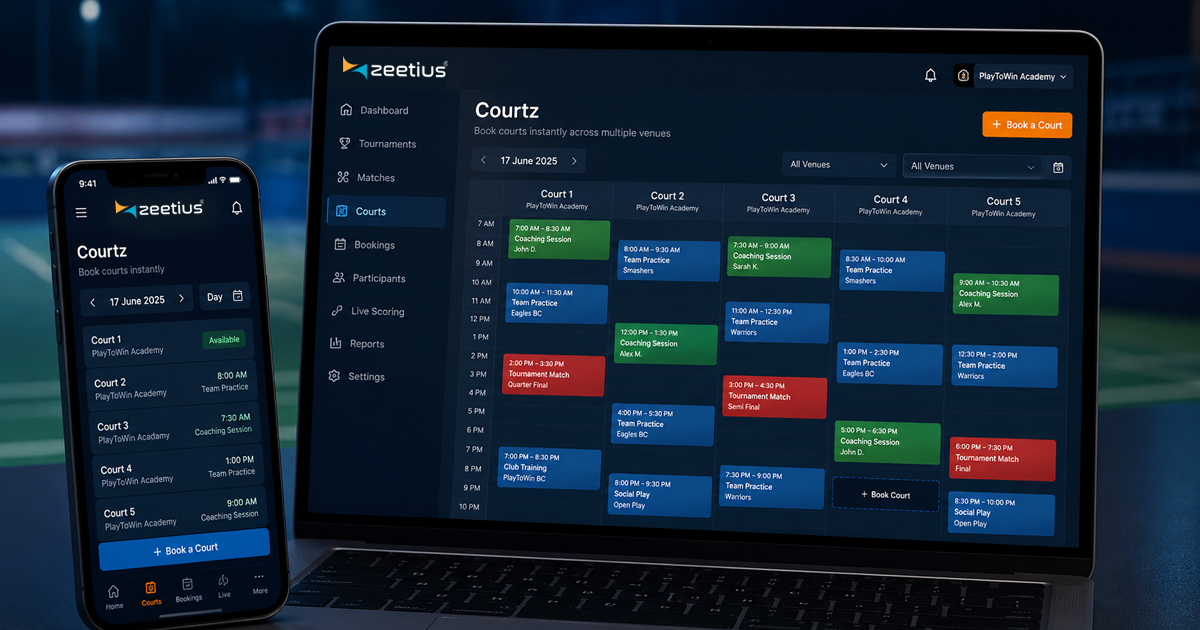
- Court booking before tournament management. The overwhelming majority of pickleball and padel activity is booked social play. That is why Courtz matters more to a padel venue than a draw engine does.
- Ladders and leagues, not just knockouts. Ongoing competition that a player can join in week six suits these communities far better than a weekend knockout that eliminates half the entrants before lunch.
- Ad-hoc team formation. Padel is doubles-first and partnerships are fluid. A system that models a permanent pair is modelling the wrong thing.
- Skill ratings over ranking points. Ranking points reward tournament participation. A rating that updates from social results is what actually helps people find a competitive game, which is the thing they want.
- Registration that takes thirty seconds. Anything heavier loses the casual player, and the casual player is the market.
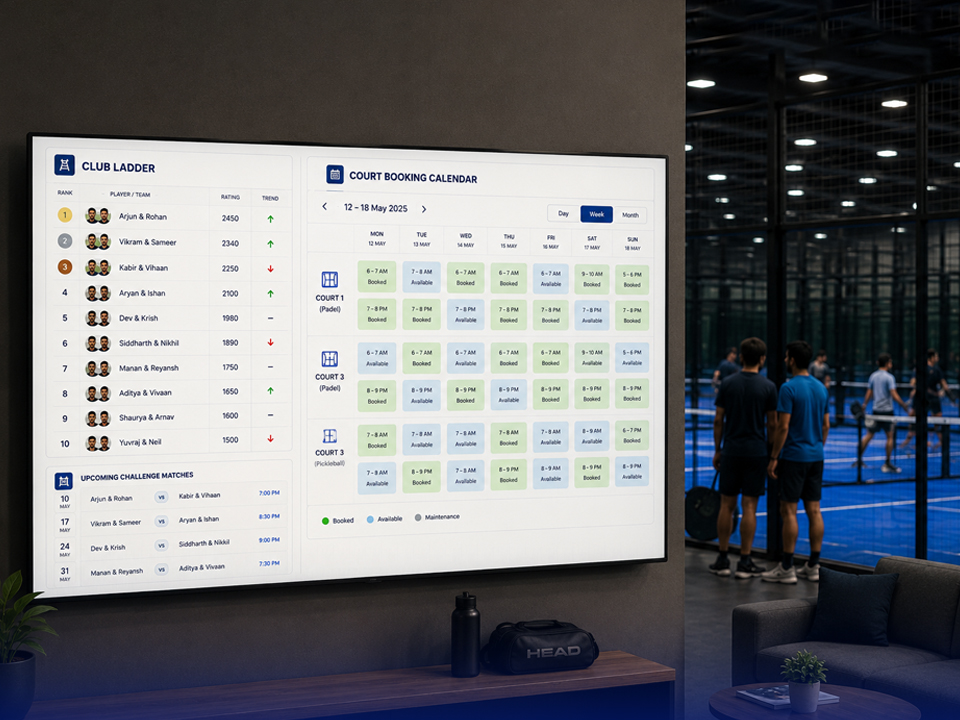
Booking and competition are the same product here
In traditional racquet sports, court booking and tournament management are separate concerns for separate teams. In pickleball and padel they are one loop: you book a court, you play a rated game, your rating moves, you get matched with better opponents, you book again. Splitting that across two systems breaks the loop, which is why we build court booking and competition on the same platform rather than as an integration.
The scoring is genuinely different too
Both sports fit the set-and-rally paradigm described in our piece on multi-sport architecture, but with parameters that catch out systems built around badminton.
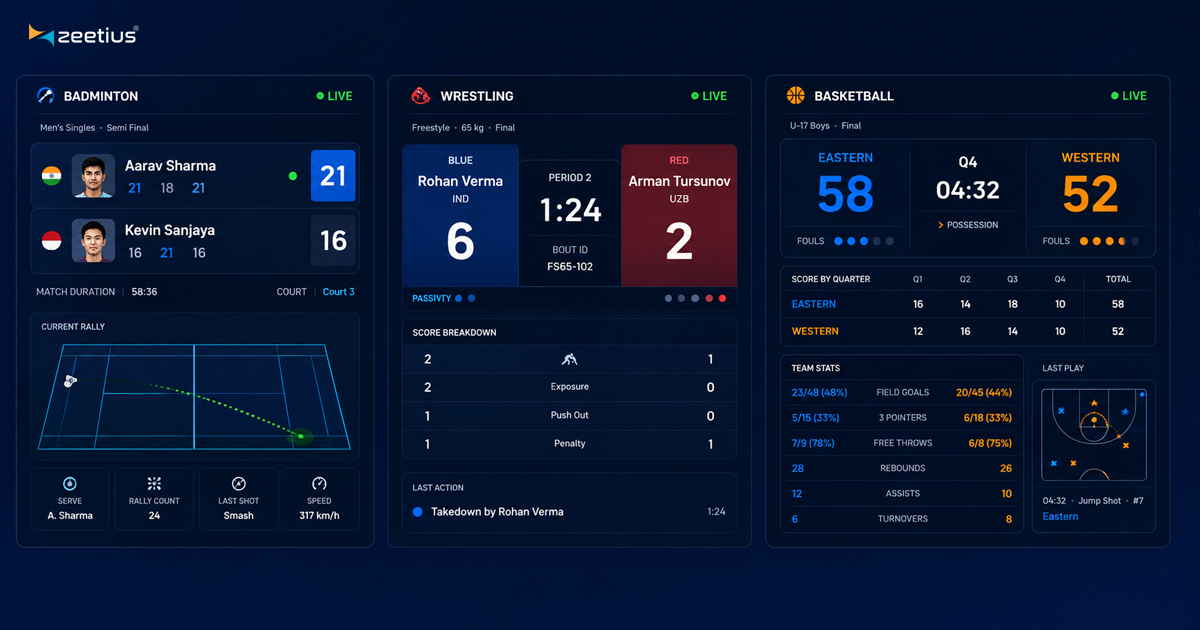
Pickleball's side-out scoring — where only the serving side can score, and doubles has a two-server rotation with a first-serve exception at the start of a game — is a genuinely different state machine from rally scoring, even though the final scoreline looks similar. Rally-point pickleball formats are also now common at tournament level, so the same sport needs both. Padel scores as tennis, including tie-breaks and golden points, which means it inherits tennis's scoring complexity rather than badminton's simplicity.
Where this is heading
Both sports are formalising fast. Federations are being established, national rankings are appearing, and the tournament calendar is thickening every season. The venues and communities that started informally are going to need the full federation apparatus sooner than they expect.
The right position is to serve them as they are now — booking-led, social, rating-based — on a platform that already contains the tournament, ranking and federation machinery for when they need it. Growing into the software beats migrating to it.